Showing posts with label Analysis. Show all posts

Sunday, April 12, 2020

Whitty Whitman


source   

        One of the first things I noticed was the front of his notebook looked like it had a cross on it. I saw some words like "What then, "Because the ...welcome," and things that looked half drawn. The significance of these words and half drawings are to show his doubt. Whitman is showing how he is   doubting himself and that doubt is being shown through how he phrases his sentences and how he questions himself.  Looking at the diary again, I see Whitman wrote them to reflect on his sadness. He was remembering his friend and then what happened to him as a result. He needed to reflect on all that happened.


      What is revealed is that he often questions his work. We can make the assumption that Whitman is a perfectionist. He wants everything to be how he saw it in his mind, and if it doesn't come out that then he comes to Abe for help. He may see Abe as a leader and someone who Whitman can ask for help.


     This reveals that Whitman is questions himself constantly but still feels the need to ask for reassurance.  It reveals that he deals with sadness by writing and talking. He needs to talk to someone about what he is going through. After losing his friend he needed to talk to someone. Abe Lincoln was the person that he wanted to talk to because Lincoln was someone who went through a tough life.


Tuesday, February 18, 2020

Translations

Image result for Franz Kafka's novella Metamorphosis


Quote 1: "Gregory Samsa woke from uneasy dreams one morning to find himself changed into a giant bug." - 
       In this quote the diction is very plain. The vocabulary is not advanced and it would be understandable for all ages. The word "uneasy" make the tone known though. The plainness of the text does not take way from what is trying to be said. They also have long syntax to emphasize the change and the confusion that is occuring with Samsa. Longer syntax is supposed to help with creating order which happens in the sentence in chronical order. He woke up, it was morning, and then found that he was a giant bug. The is also no ambiguity. The translator tells us exactly what happens and how it happened. 

Quote 2: "When Gregor Samsa awoke from troubled dreams one morning he found he had been transformed in his bed into an enormous bug." -
       There is much more descriptive diction. By describing the quote as "troublesome", and using the word "transformed" the readers can get a better grip on what has happened to Samsa. The quote tells us the dream was unpleasant and when he woke up he turned into the bug. By saying "transformed" it also implies that Samsa was not a bug to begin with that he was something else. That creates some mystery and ambiguity about the situation. Choosing to not tell the reader what lead to the this transformation or what he was transformed from lets the author foreshadow events and talk vaguely about past events.The syntax here was long to also create confusion because we do not know what happened to Samsa and what will happen to Samsa. 

Quote 3: "As Gregor Samsa awoke one morning from uneasy dreams he found himself transformed in his bed into a gigantic insect." - 
     This quote has good imagery in the sense that the reader can picture what exactly is going on to Samsa. We know what an uneasy dream is and a gigantic bug. Those descriptions help the reader picture what has happened and what's currently going on. The structure is set up up so the reader can easily follow what is happening.There is no fluff in between the important information. The information is given and the translator leaves in only the important parts. They don't think that the dream is all that important but the transformation into the bug is.

Quote 4: "One morning, upon awakening from agitated dreams, Gregor Samsa found himself, in his bed, transformed into a monstrous vermin." - 

    This quote is highlighting and stating that all aspects of what happened to Samsa was important. The dark diction used shows how the translator saw and interpreted the transformation as something otherworldly. They think it is all unnatural and that this is a punishment. I conclude this because of the word vermin and how it is typically defined. The structure is also for more advanced readers. The word monstrous and vermin are words that not a lot of younger kids use, so this translator is trying to talk to older generations.


Compare/contrast 
 What does this exercise bring up about the difficulty of reading translated texts? How do different translations effect the tone of the sentence?
     Word choice, syntax, and imagery shift the meaning by making the tone more or less intense. The word choice and the syntax work close together and they help establish how the translator feels about the piece. In quote 2 and 4 the diction was intense and really negative which helped showed how the translators felt about opening the story. Though they still opened it in different ways the overall meaning and message they were trying to convey was the same, like quotes 1 and 3. Imagery helped with the meaning because all except quote 1 used descriptive imagery. The use of this helped establish what was important and what the translator wanted you to pay attention to. That was used in quotes 2  through 4.
         I definitely think that imagery is more effective and better to get an audience to see what is going on and the better the beginning of the story will be. The imagery in quote 4 was the best and best showed what had happened to Samsa. Though two others used imagery that quote used it most effectively. By using imagery the translator is enabling the reader to become a part of the story by seeing and experiencing what the characters are which makes it the most effective technique.
     It brings up the difficulty of  some words not having translations in some languages. Some words are specific to that language and phrases to that region. By translating the text those words or phrases might be lost among the translations done.  Different people might see the text differently and then translate it how they see it. That brings in personal experience and their culture which may take away from the original culture it was written in or for. The different translations also affect the tone because the translators see the story in different ways and want to write the beginning in a intense way to jump into the action rather than build tension.

Sunday, February 9, 2020

What covers mean to me

        Image result for never let me go book cover           
     
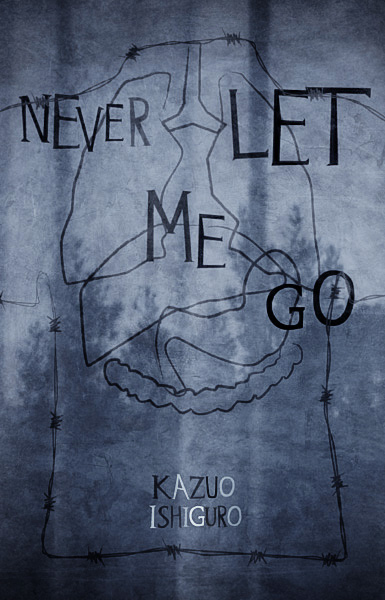
           In all of the covers there is one main picture. In all four they have one image that is supposed to stand out and be the main focus of the cover. The image is supposed to signify the isolation theme that is presented throughout the book. Isolation is a key part of the book but in hidden ways, so the cover is going to show that isolation in more unique and fun ways.

        The covers convey isolation in different ways. The one in the upper left corner is showing the isolation when the memories are slowly going when they are donors are trying to remember who they are under all the medication. Unlike the one next to it with the boat, it is meant to represent the hope of leaving. Though it is unrealistic the hope of escaping is a one person adventure creating isolation there. The grey cover is also meant to represent the process of when the donors are going under medication. The artistic title is madam's gallery and the hope that was brought when discovering the potential purpose it had. The last cover with the faded girl is meant to represent the broken relationships that wore everyone down and how they were only half people. They werehuman lives but weren't really human.

      With the boat image the first thought that came to mind was abandonment. The place looked like no one has been there for year yet it has been in great shape. It makes me think of the owners leaving it in the care of a caretaker. The caretaker I think would care and love the place in hopes of the owners coming back while also knowing they will not. The one that has the grey cover brings the word haunted to my mind. It is left behind and abandoned but for a good reason. It seems to have a dark secret attached to it. 

      The images would make me think the story is a horror or thriller story. I would think the story ends tragically. Now having read it I see how the grey cover is relating to isolation and madam. I see the art is meant to be Tommy's being that is more on the childish side. How it is drawn is showing the story is darker and has many twists and turns. The cover with the boat suggests that there also might be a horror element and that the ending will be more ominous than tragic. After reading it though it is closely linked to the sea city of Norfolk. That is where all things lost are found. So to have that as a cover is fitting. That shows how important holding on is.

      The cover with boat is Norfolk being represented. The wide expanse and what is implied throughout the book about Norfolk is what is being shown. Norfolk is the sea city and where all things lost are found and that is shown with the boat and water. That was also where the students all had fantasies about leaving and being able to go. It is through Kathy's viewpoint who is waiting for Tommy to someday come back to her in Norfolk. The other cover Tommy is being portrayed as well as his art. His art is shown as childish and portrayed and this is from Tommy viewpoint.

Sunday, January 5, 2020

Who is Who Dr. Jekyll and Mr. Hyde


Source
      Mr. Hyde in Chapter 2 is described as a monster of man. He appears to Utterson as not quite human. He is described by Utterson as a "man seems hardly human. The tone and diction that is used to describe is almost all negative. Utterson is also unsure how to describe and approach him. "Mr. Hyde Shrank back with a hissing intake of breath"(9 Stevenson). This was showed how he and others may receive. The thoughts that Utterson have are geared more towards how Dr. Jekyll is doing and why he is associating with Mr. Hyde.
  
               Mr. Hyde is also very aggressive. He is shown to be guilty of something in how he speaks and acts towards  Mr. Utterson. He is shown as a monster of a man and as someone who does not think far in advance. He is more reactionary to what is going on around him and impulsive.
source 
     Dr. Jekyll is portrayed as man who is scared. He can't get out of situation. Dr. Jekyll is scared of what is happening but he has also accepted it and is trying to move on. An example being, "If I could make the choice; but indeed it isn't what you fancy; it is not so bad as that..." (13 Stevenson)  Here he is showing how the situation in his mind is bad but he won't let anyone help. During the encounter Mr. Utterson wants to help in a professional manner and as a friend. It is hurting Mr. Utterson that he is unable to help his friend because Dr. Jekyll won't share what is happening. 
       
      My purpose is to show that they are two people. I want to look at this through the split personality and through that I will compose a poem that shows two distinctly different poems. Both characters will be seeing the same thing but their reactions will be vastly different.

Street Lights                                       Street Lights 


The people walking                          Bugs Running 


Why do walk so uniformly            Why do they always run      


To analyze, to  study             To know why and change 


Just one step back                            Just one step out in the open 


Street Lights                                     Street Lights 


Illuminate, too much                       Just want to be seen 

Sunday, November 3, 2019

Blog #4

source 
                 In chapters 11-12  the elevated diction and elaborate syntax contrasts with the narrator feeling of lost and in need of comforting. The language is advanced to show that the narrator is struggling with things that they may not fully understand. They know the basics of what is going on but do not fully grasp the severity of the situation. The narrator may also be young, and the issue is one that adults have to deal with. 

                       
                  The central idea is that people need to be able to rely on others for help and that you should not be afraid to ask for help if you need it. We see this presented when the neighbor is offering help to Helen and offering her advice. She is telling her to be truthful and that if she is she might be able to help her. It is also presenting the idea of being truthful. The way that she discusses buildings and their entrances and exists shows that sees him as little more than a means to an end. It is like each door has one purpose and should only be used for that one purpose.
  
              The author decided to personify him as a person who was a polar opposite of Miss Temple. The readers are supposed to root for Miss Temple. By making him the opposite they are making the people dislike him. Here Miss Temple is seen as a silly girl and that she should listen more, and the man should be the one people listen to and the one that everyone likes not the other way around. 


Whitty Whitman

source            One of the first things I noticed was the front of his notebook looked like it had a cross on it. I saw some words l...